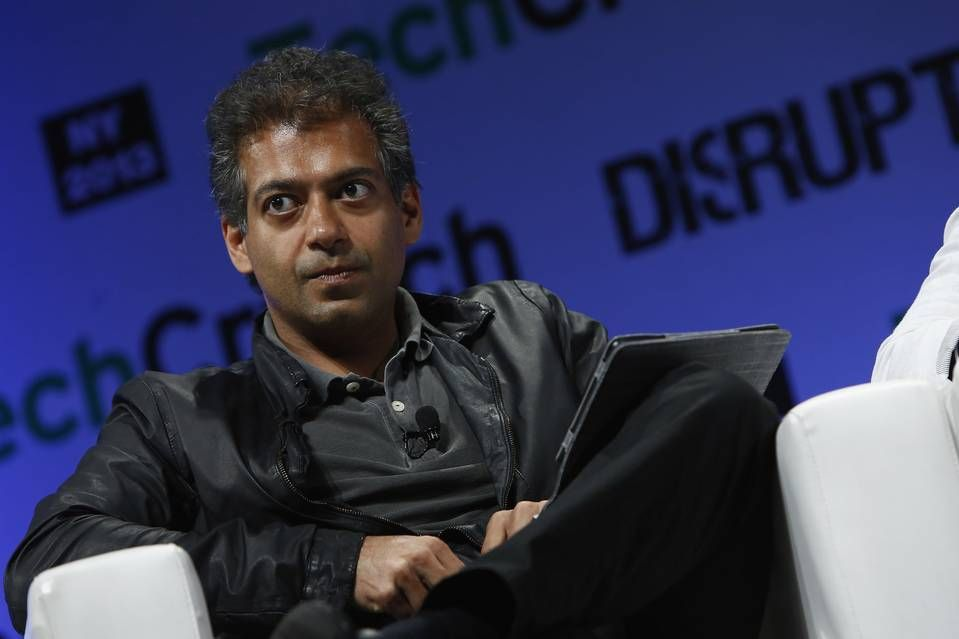
PS: These are some of my takeaways from the naval motorcycle mind! open to have the conversations,
naman@samvan.in
I recently went deep into a conversation by Naval Ravikant on AI, and I don’t think it was just a podcast for me, it felt more like a mirror. A mirror of where the world is going, but also a mirror of where I stand right now. Because there’s a lot of noise around AI, people saying it’s going to take over everything, people panicking, people overhyping, and somewhere in between all of that, there’s a very real shift happening. Not loud, not dramatic, but deeply structural. Naval talks about how there is no demand for average anymore, and the more I sit with this, the more I see it in real life. AI has not created this reality, it has just exposed it. When everyone has access to tools, the only thing that matters is output. Not effort, not intent, not how hard you worked, but what you actually ship. And in that world, average doesn’t even get rejected, it just disappears.
At the same time, Naval also talks about how more niches will get filled, and this is where I think most people are missing the point. Everyone is thinking AI will centralize power, but it’s actually decentralizing creation. Earlier, you needed money, teams, infrastructure to build something meaningful. Now you can build something extremely specific, for a very particular audience, and still win. In fact, that’s how you win. The internet no longer rewards generalization, it rewards specificity. It rewards people who deeply understand a small group of people rather than vaguely addressing everyone. (My thought: this is where I personally feel I need to shift, from trying to do everything to doing something that is very “me”, because general content is dead, specificity is the new leverage). This connects to another idea he mentioned, that the best product in a category will capture most of the value. Which means you don’t need to compete everywhere, you just need to be the best somewhere.
Then comes the part which really changed how I see AI itself. Naval explains that we are not programming AI like traditional computers, we are creating systems where programs emerge. You take massive human data, structure it, tune it, and let the system find patterns. It’s like building a machine that discovers answers rather than executing predefined ones. And that’s why AI works so well in creative domains, because real life doesn’t have one correct answer. There are multiple right enough answers. (My thought: this is exactly why editing, writing, storytelling is shifting, there is no one perfect output anymore, there are variations, and the best variation wins attention).
At the same time, Naval makes something very clear, AI is not truly creative. It can combine, remix, generate, but it doesn’t have intent, it doesn’t have desire. A true artist creates something that didn’t exist before in a way that still connects with human nature. That gap is still human. (My thought: this is where I feel safe and also challenged, because AI can do my work faster, but it cannot bring my taste, my emotion, my lived experience. So the real question becomes, am I actually bringing that into my work or not).
Another uncomfortable but powerful idea he shared is that the goal is not to have a job. This is where I feel a mismatch in my own life. Because I am currently living a corporate structure, but my thinking, my exposure, my inspiration is leaning towards building, creating, exploring. (My thought: there is a gap between how I think and how I am operating daily, and I either have to align it or consciously accept it, otherwise this friction will keep increasing). Entrepreneurs are not worried about AI because they don’t have a job to lose, they have something they want to build, and AI becomes their leverage. That completely flips the narrative. AI is not competition, it is acceleration.
Now coming to the real world application, especially in the video and film industry, which I’m closely connected to, I can already see how AI is changing things. Earlier, something like a bomb blast scene in a movie would require heavy VFX pipelines, expensive machines, skilled artists, and days of rendering. You are talking about lakhs of rupees and multiple days for just a few seconds of output. Now, with AI, that same complexity can be generated at a fraction of cost. (My thought: the irony here is important, the difficult heavy lifting is becoming easier with AI, but the simple human tasks like acting, dialogue delivery, emotional continuity are still difficult. So AI is flipping what is easy and what is hard). You can generate chaos easily now, but you cannot generate human subtlety perfectly yet. That’s where we still come in.
Another layer where I see massive disruption is education. If you think practically, tools like ChatGPT or Claude cost around ₹20,000 per year, while even basic tuition or coaching can cost more than that for a single subject. And AI doesn’t just teach one subject, it can teach everything, at your pace, at your level. (My thought: this doesn’t replace schools completely, but it changes the value of traditional education. Knowledge is no longer scarce, guidance is). So the real edge is not access to knowledge anymore, it is the willingness to learn and apply.
Naval also talks about how we don’t need to learn complex tricks to use AI, because it will adapt to us faster than we adapt to it. I see this in my own life. I don’t sit and learn prompt engineering deeply, I just talk, I just explain, and it works. (My thought: this is freeing, because it means I don’t need to over-optimize tools, I need to improve my thinking and communication). He even says English is becoming the new programming language, and that is already visible. If you can clearly express what you want, you can build almost anything.
There is also a deeper layer where he says the real risk is not AI, but humans using AI with wrong intent. AI is shaped by what we want. It becomes helpful, agreeable, and useful because that’s what gets rewarded. (My thought: this is true across everything, tools don’t define outcomes, people do. So the fear of AI is actually fear of humans).
Another powerful idea is that intelligence is not about knowledge, it is about outcomes. It is about whether you can get what you want out of life, whether that is health, money, relationships, or peace. In a world where AI gives you access to almost all knowledge, the differentiator becomes execution. (My thought: this hit hard, because I already have access to everything I need to learn, but the real question is, am I using it properly or just consuming it).
He also mentions that the means of learning are abundant now, but the desire to learn is scarce. And I think this is the real filter of the future. Not talent, not background, not access, just intent. Who actually wants to grow. Who is willing to sit, learn, iterate, and improve.
Bringing this back to my own life, AI has already started changing how I operate daily. I use it to transcribe my thoughts into blogs, to save time, to think faster. (My thought: earlier I would sit and write for hours, now I can speak, cook, think, and create simultaneously. It’s like compressing time). I can manage notes, structure ideas, explore concepts without friction. It’s not replacing me, it is amplifying me. But that also means if I am unclear, it amplifies confusion. If I am clear, it amplifies clarity.
So where does that leave us?
AI is not fully taking over practical life yet. Robots are not replacing physical work tomorrow. But the shift has already started. And if you don’t start adapting, you will slowly become irrelevant, not because AI replaced you, but because someone else used it better than you.
In the end, what I took from Naval is very simple but very hard to execute. This is not a technology race, it is a clarity race. Tools are available to everyone. The real question is whether you know what you want to build. Because AI will not decide your direction. It will only accelerate it.
And maybe that’s the most honest truth of all. AI is just leverage. It will make you faster, sharper, more capable. But it will not tell you who to become. That part is still yours.
Leave a Reply